Week 0
Reflecting on interests
We’ve come a long way here. At the start of 2024, I spent a semester doing an exchange in Sheffield Hallam University, in the United Kingdom. We were assigned a project where we could construct our own briefs. Like every clueless design student, I turned to the internet – browsing pinterest, tiktok, whatever I could get my hands on, and just waited for a eureka moment to happen. Of course, that did not happen. Feeling frustrated, I just started from scratch. I leaned into things that piqued my curiosity.
-
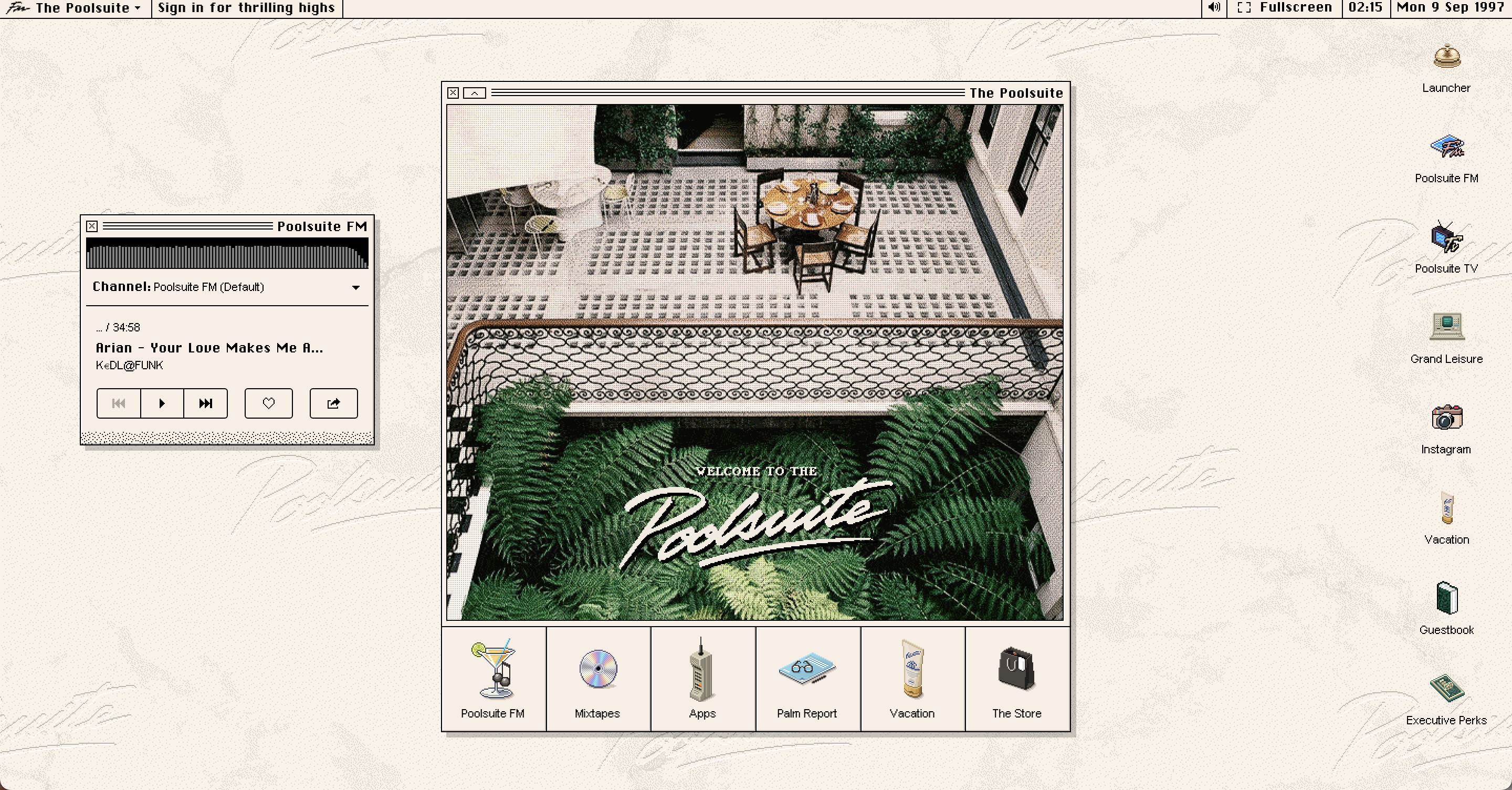
Poolsuite An internet radio station, playing infinity pool of summer sounds 24/7.
As the adrenaline faded off, a series of questions came rushing in: “Who made this?”, “How did they come up with this?” I did find bits and pieces of information, such as the creator, Marty Bell. I subsequently fell into a deep web hole and found like-minded individuals who are quietly looking for these spaces on the web too. Though there is nothing much defined here, the process of questioning and tracing the steps of my curiosity was a fulfilling one, and I hope that this initial desire leads to bigger things for my final year project.
Introduction to Digital Gardens
From the initial curiosity of website designs like Poolsuite, I went on to research other related information about it and found an array of valuable resources about the web. One of them is the term digital gardening, which is a philosophy of approaching websites. In this philosophy, authors usually upload unfinished text fragments, notes and ideas, as opposed to a usual blogpost or newsletter, where it is published as a whole after many revisions. The goal is to develop text projects like essays, and each idea can be grown, using gardening metaphors to envision how it worked. These are examples of digital gardening on the realm of content publishing by Maggie Appleton , and Mental Nodes.
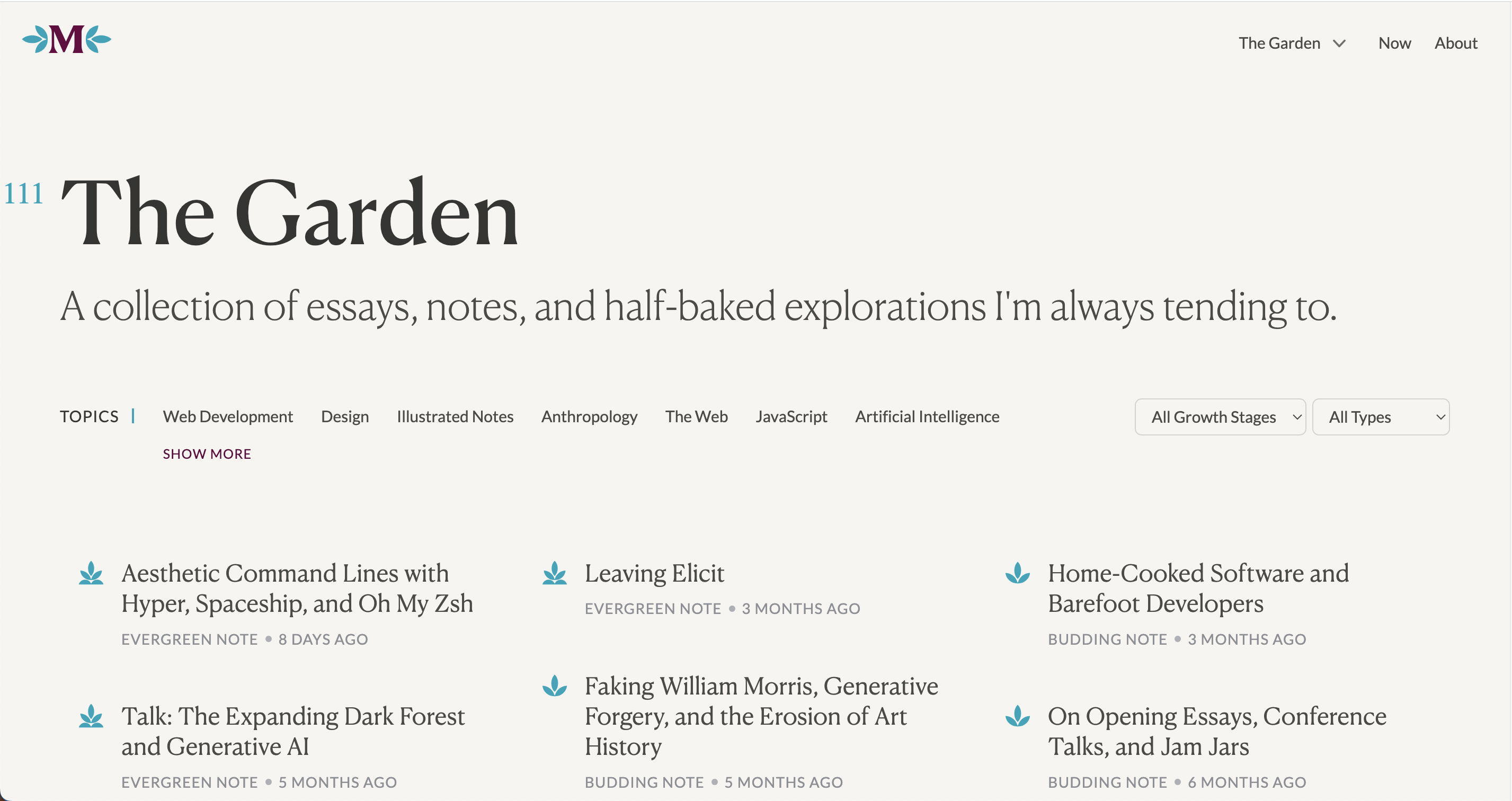

One thing I really like about digital gardening is the community and openness to share new knowledge on the web, which in my opinion, is hard to find nowadays.
-

Hypertext Gardens (1998) by Mark Bernstein
The other is a web page essay called “Hypertext Gardens: Delightful Vistas” by Mark Bernstein (1998), that explores concepts in web design and hypertext. This was published in 1998, an era when people were experiencing a navigation problem on websites. In his essay, he uses the metaphor of gardens to compare it with web navigation, emphasising irregularity, pathways, and discovery. His main critique is websites have too much rigidity, and that it should be more playful.
“Often, however, designers should strive for the comfort, interest, and habitability of parks and gardens: places that invite visitors to remain, and that are designed to engage and delight them, to invite them to linger, to explore, and to reflect.”
Reflecting on both interesting points I brought up, the use of garden metaphors used on the web made so much sense to me. It really shows the importance of visualisation. Prior to knowing this, I feel like I was merely consuming whatever that comes to me on the internet, but now, this visualisation helped me realise a sense of responsibility that users of the internet should have – in a web filled with noise and distractions, and algorithm-based content, we have the responsibility and the capacity to make little changes as well.