Week 9
Lecture with Ashley Hi from Feelers Feelers
Today’s lecture is called ‘The Ghost in the Machine might in fact be an Angel’ by Ashley Hi from Feelers Feelers. I remembered back in the earlier weeks Andreas recommended feelers to me and I was immediately intrigued. After a couple of snooping sessions on their instagram, and their website, I resonated and love the work that they are trying to put out, so I was already very excited to attend this lecture. I've written down some important pointers that got me really excited to hear about so this week's cpj entry will be a long one.
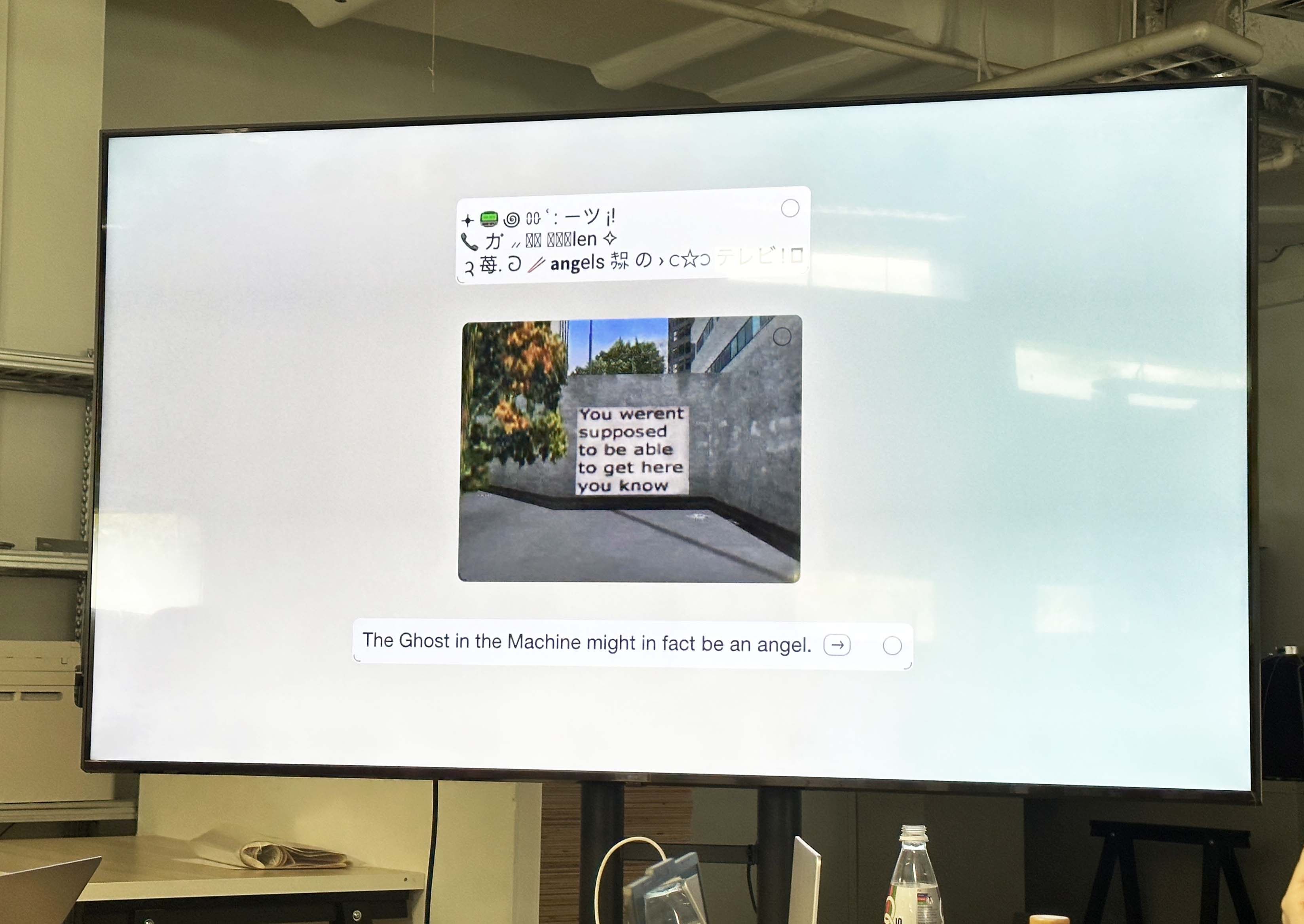
The Ghost in the Machine might in fact be an Angel by Ashley Hi
Permacomputing
Her presentation on permacomputing was insightful, as she explained about the small different adjustments that could be made when website designing to encourage care towards the technology and the environment. For example, being conscious about the amount of data loaded on websites, through loading the images at the scale that they will be displayed, using the usual system fonts, like the woff format, compared to third-party fonts from servers like Google, as these have extra data being loaded onto it, and transitioning to dark mode helps as well.
I noted this down because this reminded me of the permacomputing case study which I found in the earlier weeks. Her approach is more practical compared to Hannah's approach, which is more experimental and visual.
Jevon’s Paradox
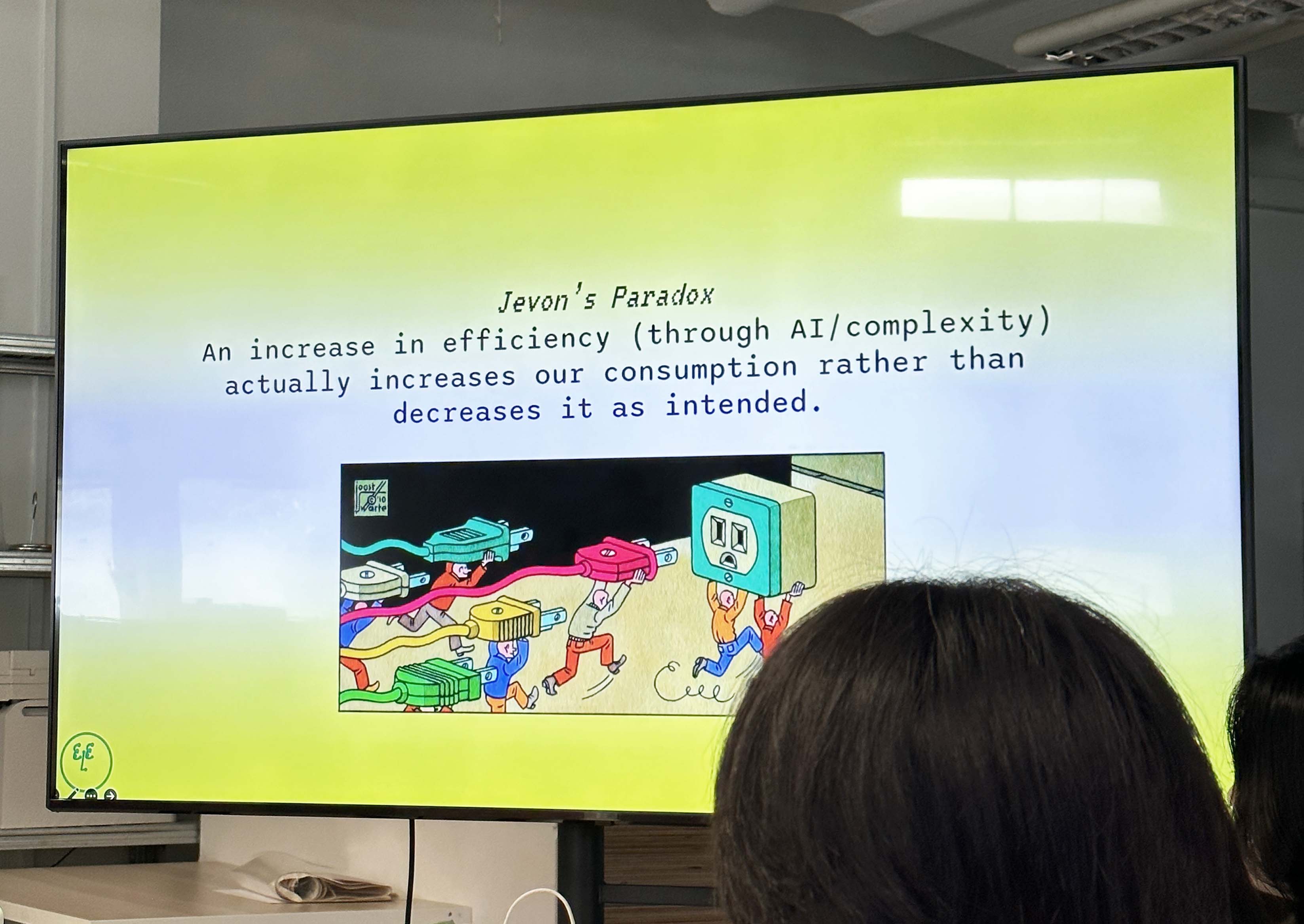
Jevon's Paradox or Effect
In economics, Jevons paradox occurs when increased efficiency in using a resource makes it cheaper to use, leading to higher demand and ultimately causing more of the resource to be used instead of saving it. Ashley mentioned Jevons Paradox in reference to Web3 and blockchain, through the idea that even though it is designed to be more efficient and decentralised, increasing efficiency and accessibility can lead to higher demand and usage, and end up increasing resource consumption.
Blockchain networks like Bitcoin and Ethereum use significant computational power to operate for mining. As technologies improved, making it more efficient, it could lower the cost for blockchain. However, the increased use will increase in energy consumption, which could be called the Jevons Effect.
This was such an interesting concept to reference, and I remembered I was reading up about decentralisation about the internet, but I couldn't think of this angle to approach this.
Computational Pandemonium Model
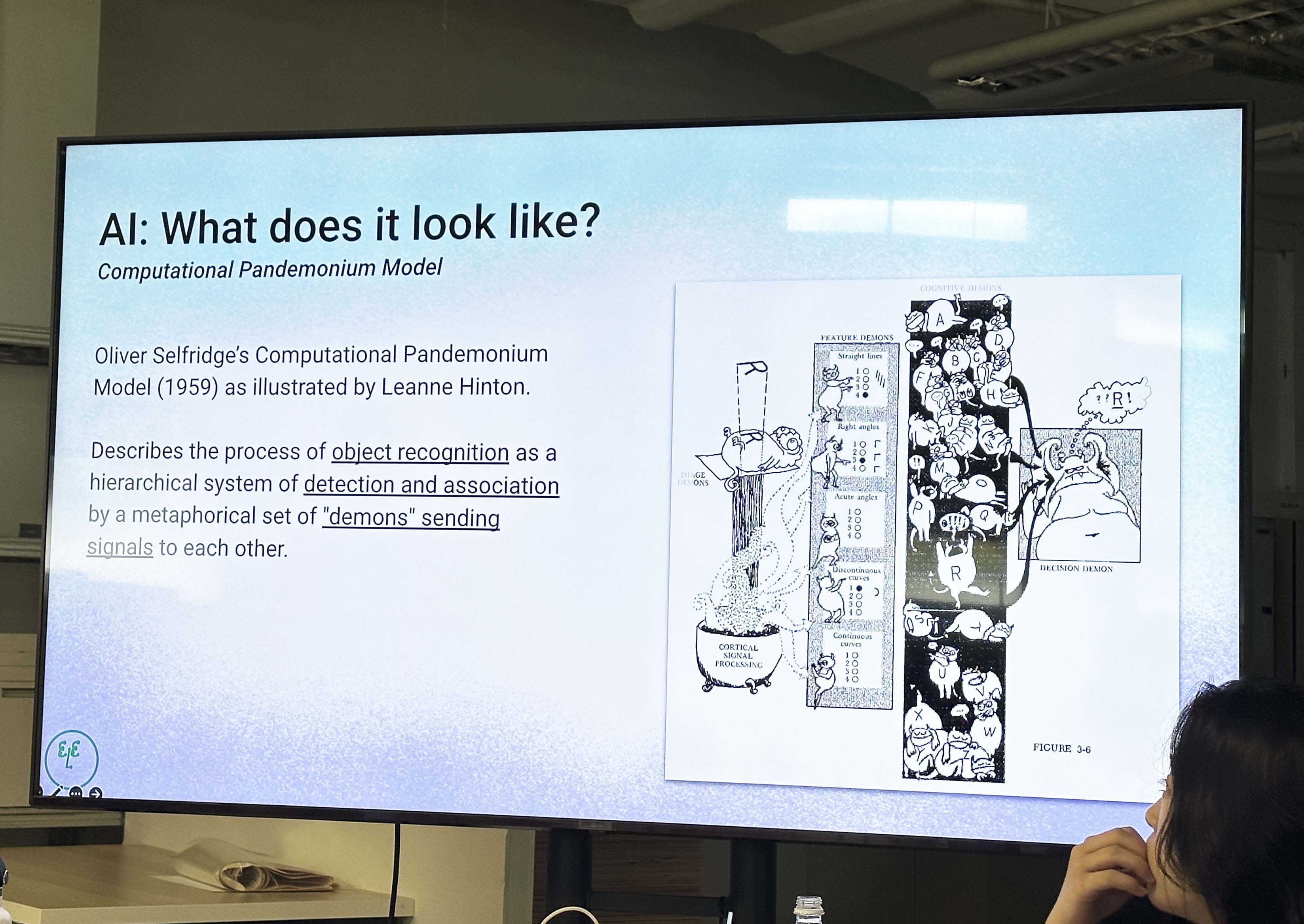
Computational Pandemonium Model I really love the use of metaphors to visualise this
The next concept that she brought up was the Computational Pandemonium Model by Oliver Selfridge. Conceptualised in architecture, the theory describes how visual images are processed by the brain. The use of demons is metaphorical, and it captures the idea of these small agents working to look for something. I really like the use of demons in a metaphorical sense to illustrate a complex idea. I couldn’t find reasons as to why demons were used, but I would be interested to see if there are any more playful metaphors that were used by early computer scientists.
Reflecting on Ashley's Lecture
The three different concepts introduced are largely varied in nature: Permacomputing; Agriculture, Jevons Paradox; Economics and Computational Pandemonium Model; Cognitive Science, yet I’m still amazed by how diverse in visuals, and how fun these outcomes are.
Bringing back to my research I could think about the decentralisation of the web through the lens of economics, or thinking of approaching metaphors through a cognitive science model, rather than limiting my research on straightforward stuff on the internet or web limits what I have on mind.
Writing and searching for reading materials are definitely not my strongest suit, but after today’s lecture, I feel inspired to think out principles beyond just looking at the internet and web care. Hence, one of my biggest reflections from this is approaching my research and conceptualising research, to be more open and think out of the box.
Arduino Workshop
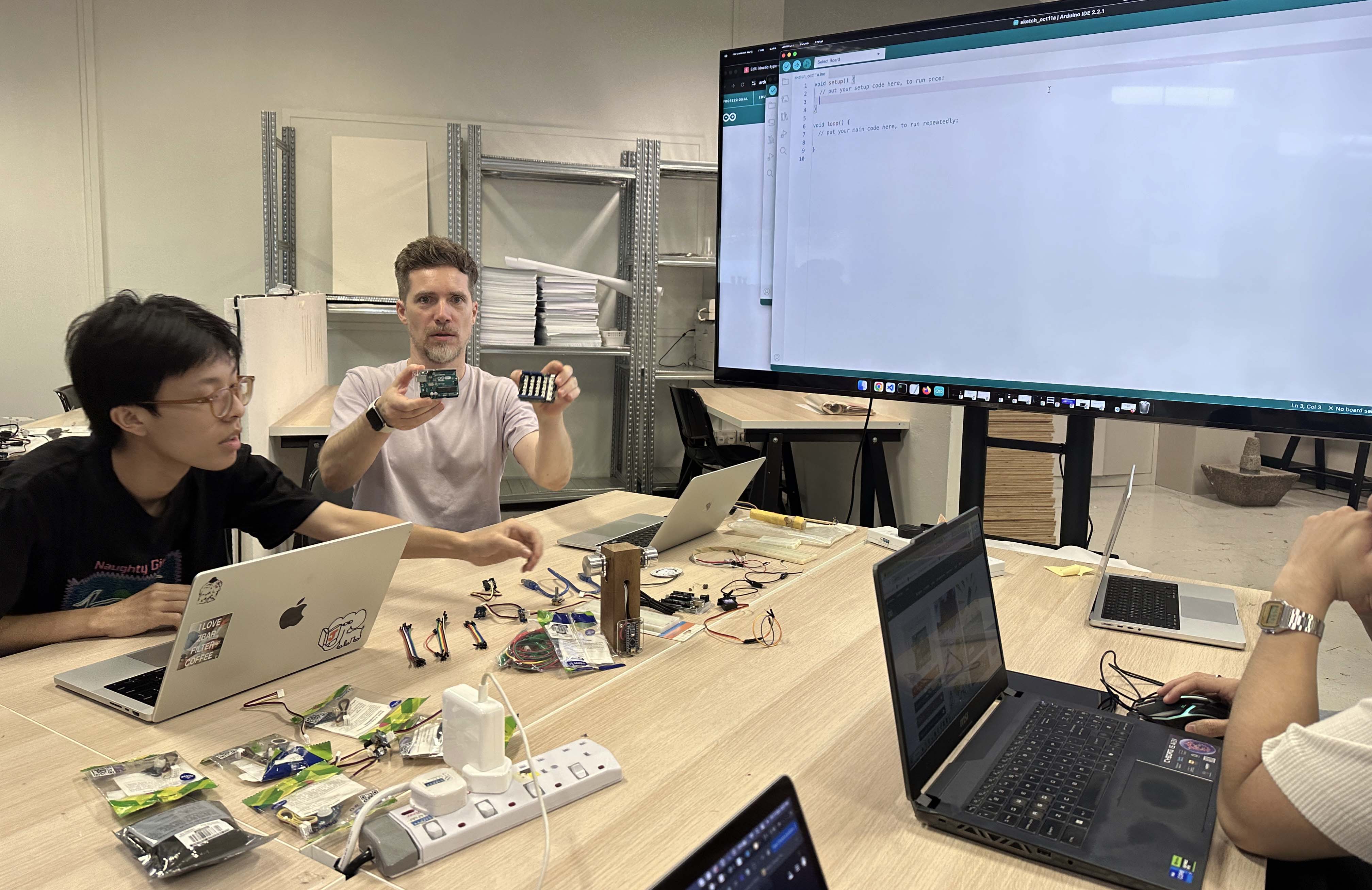
Arduino Workshop So many different parts on the table...
We had a workshop with Andreas to refresh our knowledge on the Arduino. The arduino is a tiny computer that can connect to electrical circuits. It is mainly used for creating physical interactions with laptops or computers, which is great since my project is looking at the interactivity of the computers as well.
There are a few websites that Andreas provided which I think are useful to explore, learn and gain inspiration from, such as Project Hub Arduino, Honnet, and Instructables.
There are some technical terms which I have written down during the workshop such as the difference between analogue and digital, analogue for a range of values, or more than 2 states, and digital for only 2 states (yes, and no). The arudino also has some pins labeled “GND”, which are called ground pins (0v). As we learn in physics, electrical current always flows from some positive voltage to ground, so those GND is crucial for completing circuits.
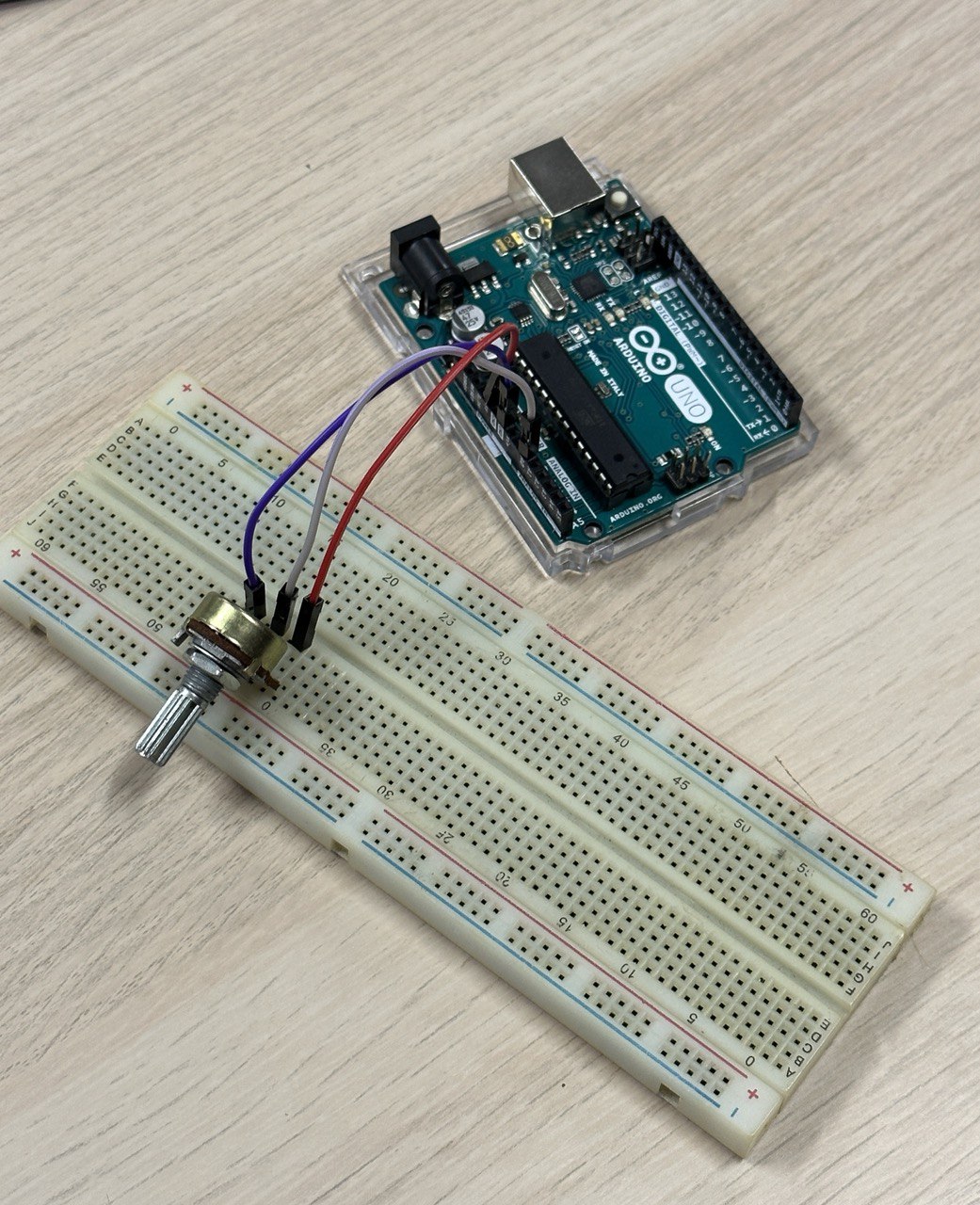
Arduino Workshop So many different parts on the table...
There were 2 different types of arduino we experimented today, one is the Arduino UNO (harder in difficulty), and the Arduino Shield (simpler). We also were introduced to the Breadboard, which I now know the importance of - to make temporary electrical connections to test circuits before permanently soldering them together.