Week 2
Presentation
This week we finally presented all of our topics. My presentation did not go as smoothly as I wanted. In fact, it felt like a huge mess. As I had extra time to present, I talked about the topic of the web, and delved into a reading called ‘Hypertext Gardens’ which talks about designing links in web design. Additionally, I briefly mentioned how web designs have changed to be more homogenous as web designs evolved. Reflecting on that presentation, it was normal to be clueless and messy about what you’re intended to do. The research has only just begun.
-

Jun Liang's Presentation About Aliens and AI. Super interesting!
After my presentation, Andreas recommended two new concepts that I could further look into based on what I've talked about about the web. He introduced the term permacomputing and hypertexts for me to research.
-
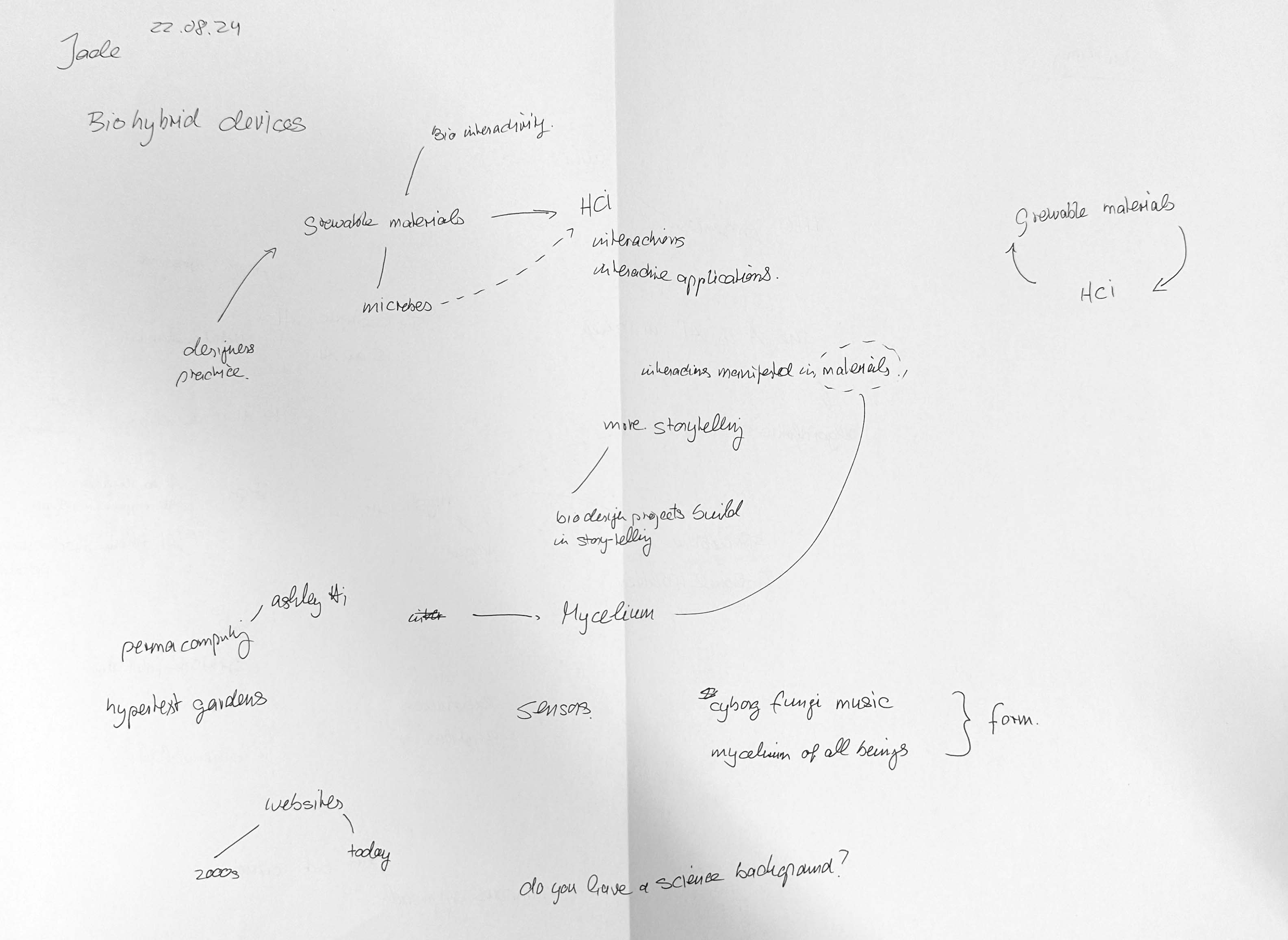
What I presented There were 2 huge topics flowing around.
-

Permacomputing Inspired by permaculture.
Researching on Permacomputing
Based on my research, the idea of permacomputing is a concept and a practice oriented around issues of resilience and regenerativity in computer and network technologies, inspired by permaculture. It delves into huge environmental and societal issues in today’s computing. It is an anti-capitalist political project. It is driven by decoloniality, anarchism, intersectional feminism, post-marxism, degrowth, ecologism. Permacomputing is an invitation to collectively and radically rethink computational culture. It is not a solution to something, but more of a principle that could be practiced.
After reading about permacomputing, I am still quite confused as to how to apply permacomputing concepts onto the web. I do really appreciate the care that's given towards the web, and I think that's a good direction. There are other questions that I'm curious about, such as looking at concepts that look at rethinking the web. I also wonder how does computing relate directly to environmental and societal issues.
-

Permacomputing as a Practice for Digital Graphic Design by Hannah Gmeiner.
Case Studies: Permacomputing as a Practice
I found this case study through Tim Rodenbroeker's interview with Hannah Gmeiner on Permacomputing. This project was done by Hannah for her bachelor's project.
I think what's interesting is that it delves into the fields of technology, cultural work, environmental research, and activism, and consists of a concept that embraces limitations within computer culture. It promotes an alternative to principles towards graphic design practices that promote consumption and throwaway mentality.
One of the main questions I had when dealing with the topic of web design and its issue of homogeneity, is whether it is the nostalgic factor that prompts me to look back at the web in fondness. However, Hannah's research showed a different perspective towards nostalgia through the lens of permacomputing.
“The question of nostalgia in the Permacomputing aesthetic is entirely valid, but Permacomputing argues for a more reflective nostalgia, within which experimenting, playful combination, and critical thinking occur. It is about seeing computer devices as tools waiting to be rediscovered and repurposed.”
Through the lens of permacomputing, it is hard to separate the relationship between time and consumerism. In the business sense, "outdated" things are considered as nostalgic as they have exhausted their time of maximum economic value. It is impossible to yearn for and romanticise a time when computer technology was better because such a time never existed.
Permacomputing ultimately argues for a more reflective nostalgia, where experimenting and playful combinations occur, and seeing these computer devices as tools to be repurposed with care and mindful intention.
-
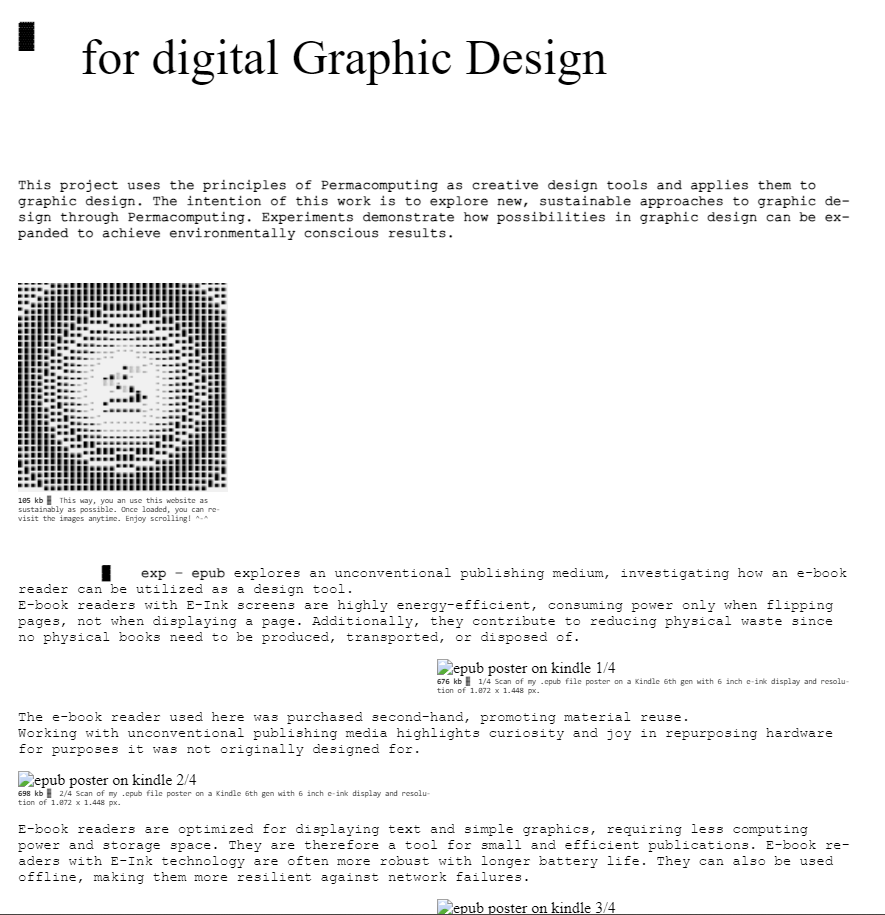
Permacomputing as a Practice for Digital Graphic Design by Hannah Gmeiner. Pictures load only when users click on them.
The website is simple, yet everything is designed with intention, and I think it encapsulates the principles of permacomputing well. One thing I really like is the use of slow loading, where pictures on the website only loads when users want to look at them.
The experiments displayed showed a variety of unconvential "outdated" medium, and I really liked the use of the e-reader, Kindle to be used as a design tool. She also explored the intersection of typography and traditional handcraft, where she investigates how the past and often forgotten knowledge and technology holds great potential for shaping a sustainable society.
Linking back to the problem of the web, I think its crucial to narrow down on the problem, and look for a guiding principle that could help aid my research through a variety of experiments.